
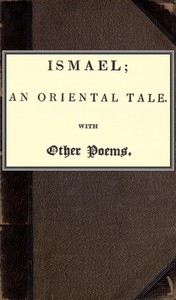
Ismael; an oriental tale. With other poems by Baron Edward Bulwer Lytton Lytton
Let's be honest, picking up a narrative poem from 1834 can feel like homework. But Edward Bulwer-Lytton (yes, the 'dark and stormy night' guy) actually tells a gripping story in Ismael. This isn't just fancy words for the sake of it; it's a full-blown adventure with a heart.
The Story
We meet Ismael as a young man in England. He's strong, smart, but deeply unhappy. He has violent outbursts and feels like a stranger in his own life. A wise elder finally reveals the truth: Ismael is not English. During a battle in Arabia, his father, a chieftain, was killed, and Ismael was taken as an infant to England for safety. Fueled by this revelation, he journeys to the deserts of the Middle East. His mission is to find his remaining family and claim his birthright. But it's not a simple homecoming. He has to navigate tribal politics, prove himself in combat, and wrestle with the clash between his peaceful English upbringing and the warrior blood he's told runs in his veins.
Why You Should Read It
What hooked me wasn't the plot twists, but Ismael himself. Lytton creates a character who is genuinely confused and angry. His struggle for identity is something anyone can understand. Are we products of our nature (that 'warrior blood') or our nurture (the English countryside)? The exotic setting isn't just decoration; it forces Ismael—and us—to ask these big questions. The poems that come with the tale in the book are like bonus tracks, offering shorter, punchier takes on love, loss, and ambition. They show Lytton's range beyond the famous cliché he's known for.
Final Verdict
This book is perfect for readers who enjoy classic adventure but want some psychological depth with their swordplay. If you liked the internal conflicts in Jane Eyre but wished there was more desert travel, this is your weirdly specific match. It's also a great pick for anyone curious about how the Victorian era viewed other cultures—it's a fascinating, if sometimes flawed, window into that. Don't go in expecting a modern novel; the language is of its time. But go in ready for a passionate, surprisingly urgent story about a man building his own self from the broken pieces of two worlds.
You are viewing a work that belongs to the global public domain. Preserving history for future generations.
Ashley Lopez
5 months agoThis digital copy caught my eye due to its reputation, the emphasis on ethics and sustainability within the topic is commendable. I'll be citing this in my upcoming project.
Christopher Martinez
6 months agoAs a professional in this niche, it addresses the common misconceptions in a very professional manner. This should be on the reading list of every serious professional.
Sandra Wilson
1 year agoBased on the summary, I decided to read it and the depth of research presented here is truly commendable. Exactly what I needed.
Edward Walker
2 years agoVery interesting perspective.

James Wilson
7 months agoI was skeptical about the depth of this book at first, but the inclusion of diverse viewpoints strengthens the overall narrative. This should be on the reading list of every serious professional.