
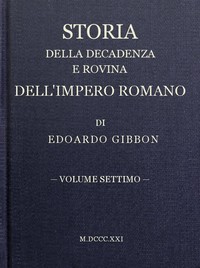
Storia della decadenza e rovina dell'impero romano, volume 07 by Edward Gibbon
Alright, let's set the scene. By the time we get to Volume 7, the Roman Empire is on life support in the West. Gibbon picks up the story in the 400s AD, and it's a wild ride through the final century of the Western Empire. We meet a parade of emperors who are often puppets for powerful generals, and watch as provinces like Britain, Africa, and Gaul slip away for good. The book follows the political and military chaos that leads to the deposition of the last Western emperor in 476—an event that was surprisingly undramatic at the time. But Gibbon doesn't stop there. He then shifts east to show how the Byzantine Empire, under rulers like Justinian and his famous general Belisarius, tried to win back the lost western territories. It's a story of fleeting reconquest, massive costs, and the ultimate realization that the old Roman world was gone for good.
Why You Should Read It
This is where Gibbon's work stops feeling like distant history and starts feeling like a sharp commentary on human nature and power. You see leaders so focused on internal squabbles and personal glory that they miss the existential threats outside. The bureaucracy is stifling, the taxes are crushing, and the army is often more dangerous to the emperor than the enemy. What struck me most was the sheer number of 'what if?' moments. What if a certain battle had gone differently? What if an emperor had listened to a different advisor? Gibbon lays out these turning points without easy answers, making you feel the weight of history's chaos. He also has a dry, sometimes sarcastic wit when describing particularly vain or foolish leaders, which is a delight.
Final Verdict
This volume is perfect for anyone who loves a great story of downfall, not just history fans. If you enjoy complex political dramas or tales of institutional failure, you'll find a lot here. It's a demanding read—Gibbon's sentences are long and his references are vast—but it's incredibly rewarding. You'll come away not with a simple list of reasons for Rome's fall, but with a feeling for how a great civilization unravels: not with a bang, but through a thousand cuts, bad decisions, and lost opportunities. Just be ready to take it slow and maybe keep Wikipedia open for the names and places. It's worth the effort.
You are viewing a work that belongs to the global public domain. Knowledge should be free and accessible.
John Brown
11 months agoThe balance between academic rigor and readability is perfect.
Kimberly Davis
7 months agoGiven the current trends in this field, the way it handles controversial points with balance is quite professional. I am looking forward to the author's next publication.
Jessica Perez
2 months agoA sophisticated analysis that fills a gap in the literature.
Jessica Moore
8 months agoExtremely helpful for my current research project.








Joseph Smith
6 months agoI was skeptical about the depth of this book at first, but the language used is precise without being overly academic or confusing. This should be on the reading list of every serious professional.